Summer Scams to Watch for in 2026
Scammers don't take the summer off. Neither should your fraud awareness.
Summer is one of the busiest spending seasons of the year. Finalizing vacation reservations, home improvement projects kicking off, and families buying everything from camping gear to patio furniture. With so much happening at once, it's easy to move a little faster than usual, and scammers actually count on it.
Today's scams reach far beyond suspicious phone calls or poorly written texts or emails anymore. They look polished, convincing, and increasingly powered by artificial intelligence (AI). Fake websites can look identical to legitimate businesses. Online listings can appear completely authentic. Scammers even craft messages that seem to come from a trusted company to steal personal or financial information.
The Federal Trade Commission (FTC) reported consumers lost nearly $16 billion to fraud in 2025. Imposter scams, social media scams, and investment scams were among the most commonly reported categories. While those scams happen year-round, certain schemes become more common during the summer as travel increases, seasonal hiring ramps up, and more purchases move online.
Understanding how these scams work is one of the best ways to avoid becoming a victim. Below, we walk through a few fraud trends that deserve a little extra attention this summer.
Vacation Rentals Are Getting Harder to Verify
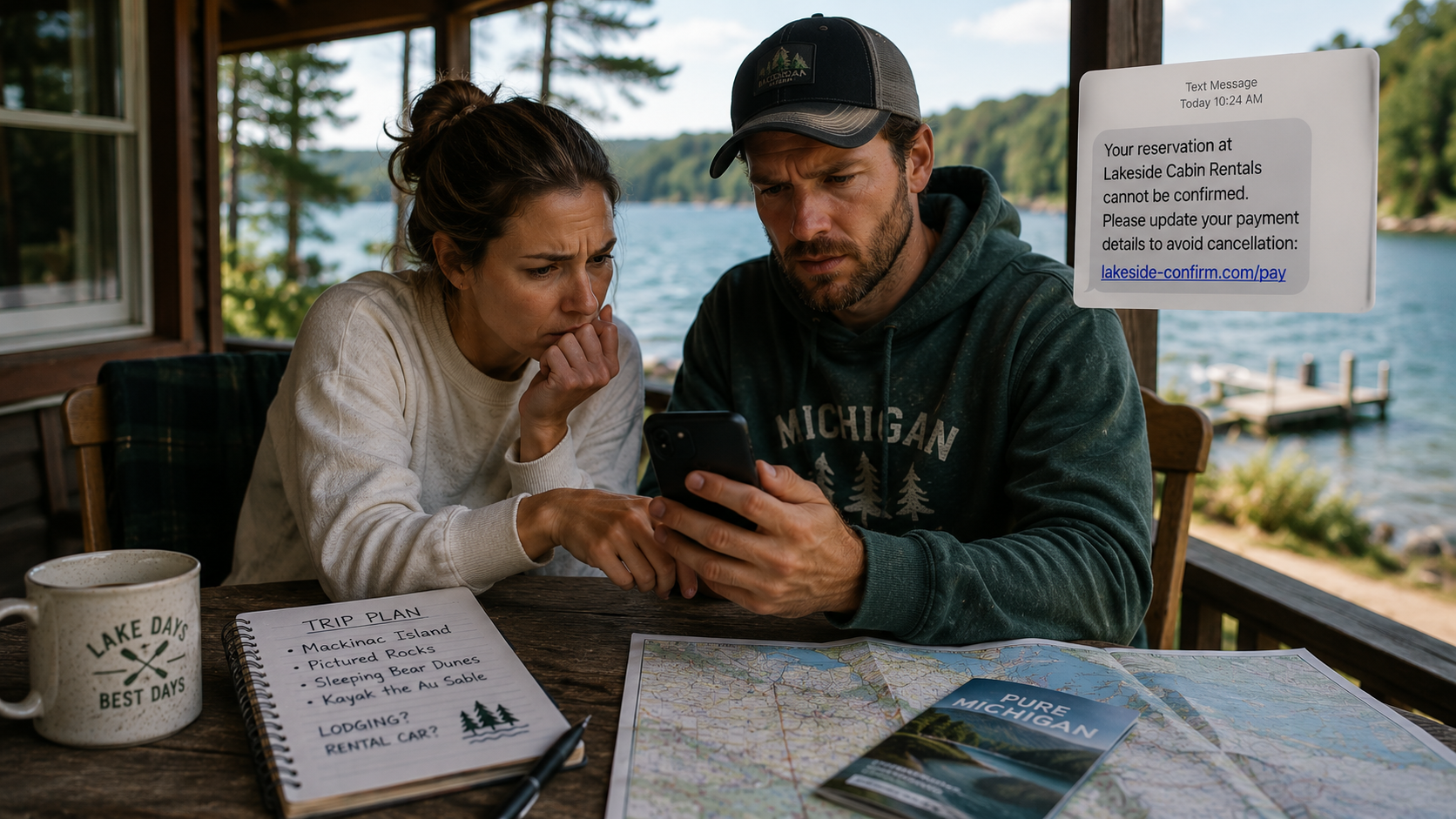
Vacation rental scams aren't new, but they've become much more sophisticated.
In the past, fraudulent listings were often easy to spot. They might have contained blurry photos, vague descriptions, or obvious spelling mistakes. Today, scammers have access to the same tools legitimate businesses use. High-quality images, AI-written property descriptions, convincing websites, and professional-looking communication have made fake listings much more believable.
The Federal Trade Commission (FTC) warns that scammers frequently steal photos and descriptions from legitimate rental listings. They then repost them on social media, online marketplaces, or fake booking websites. Other scams direct travelers away from trusted booking platforms. They encourage payment by bank transfer, peer-to-peer payment app, cryptocurrency, or other methods that are difficult to recover if something goes wrong. By the time the traveler realizes the reservation doesn't exist, the money is gone.
Social media has also become a popular place for these scams. Vacation rentals listed in community groups, Marketplace listings, or sponsored posts may not offer the same protections as recognized booking platforms. That doesn't mean every listing is fraudulent, but it does mean it's worth slowing down before sending a deposit.
Before booking, spend a few extra minutes researching the property. Search the address online, compare listing photos across multiple websites, and read reviews from independent sources whenever possible. If a host pressures you to pay outside the booking platform or insists that the deal is only available if you act immediately, consider it a warning sign rather than a limited-time opportunity.
A little extra research before you book can save you far more than money. It can prevent a vacation from turning into weeks of cancelled plans, disputed charges, and attempts to recover funds after arriving at a property that was never available in the first place.
AI Has Changed the Way Scammers Operate
AI has lowered the barrier for fraud. Scammers no longer need advanced technical skills to create convincing emails, websites, ads, or customer service messages. Many of the mistakes that once made scams easy to identify have disappeared.
Instead of receiving a poorly written email asking you to update your account information, you might receive a professional-looking message from an airline, hotel, delivery company, or online retailer. The logos look authentic, the grammar is polished, and the language sounds natural.
Researchers at Google warn that generative AI is making phishing campaigns more convincing than ever by helping criminals create polished content at scale. The result is consumers can no longer rely on the classic tell-tales (i.e. poor spelling and formatting) as signs that something isn't legitimate.
This doesn't necessarily mean a company has experienced a data breach, either. Criminals often gather information from public sources, previous data leaks, or information people voluntarily share online. When criminals combine that information with AI-generated content, that information can create highly personalized scams designed to build trust before asking for payment or sensitive information.
The safest approach is to avoid using links that appear in unexpected emails or text messages, even if they appear legitimate. Instead, navigate directly to the company's official website or mobile app and log in there. If you're unsure whether a message is authentic, contact the business using the phone number listed on its official website.
Seasonal Job Scams Target People Looking For Extra Income
Summer often brings seasonal hiring. College students look for internships, teachers search for temporary work, and many people pick up part-time or remote jobs to supplement their income.
The FTC continues to raise awareness about fraudulent job opportunities that promise flexible schedules, remote work, or unusually high pay. Some scammers instruct victims to purchase equipment with counterfeit checks, while others ask applicants to pay upfront for training materials or background checks that were never actually legitimate.
In other cases, the primary objective is identity theft. Fake employers collect Social Security numbers, banking information, copies of driver's licenses, and other personal documents under the guise of completing new hire paperwork.
Legitimate employers may conduct background checks or verify employment eligibility. However, they generally do not ask applicants to send money before their first day of work. If a company pressures you to act immediately or requests payment as part of the hiring process, it's worth taking additional time to verify the opportunity independently.
QR Codes Are Becoming the New Entry Point for Fraud
QR codes have become part of everyday life, from restaurant menus and parking kiosks to travel attractions and community events. Unfortunately, criminals have found ways to manipulate and misuse them, commonly known as "quishing."
Criminals replace or cover up real QR codes with fraudulent ones of their own, directing users to convincing websites designed to steal passwords, payment information, or other personal data. You can't see the destination before scanning. That makes fraudulent QR codes much harder to identify than traditional web addresses.
Before entering payment information or logging into an account, confirm the website address matches the organization you intend to visit. If something doesn't look right, close the page and visit the organization's official website directly.
Impersonation Scams Continue to Evolve
One of the fastest-growing fraud trends isn't tied to a specific season, but it often surfaces during busy travel months when people are distracted. According to the FTC, impersonation scams were the top reported fraud category in 2025. Criminals pretend to be your bank, a government agency, a utility company, or even a family member. Some use caller ID spoofing to make it appear they're calling from an official phone number. Others send emails or text messages that closely resemble official communications.
AI has made these impersonation attempts even more convincing by improving the quality of written messages and, in some cases, generating realistic voice recordings.
Whenever someone contacts you unexpectedly and requests personal information, passwords, verification codes, or immediate payment, stop the conversation and contact the organization using information from its official website or statement you already have.
A Few Extra Minutes Can Make A Big Difference
Technology continues to change the way we shop, travel, and communicate. It has also changed the way scammers operate. Today's fraud schemes often look polished, professional, and completely legitimate at first glance. That's what makes them so successful and evolving year after year.
Most scams still rely on one thing: convincing someone to act before they've had time to verify what they're seeing. Whether it's a vacation rental, a delivery notification, a job offer, or an online purchase, taking a few extra minutes to confirm the details can prevent hours, days, or even months of frustration later.
No one expects to become a victim of fraud. These scams aim to catch people during everyday moments, often when they're busy or excited about something positive. Staying informed about the latest fraud trends is one of the simplest ways to protect both your personal information and your finances.
If you notice suspicious activity on your Community West Credit Union account or believe you've shared financial information with a scammer, contact us right away. Our team can help you secure your accounts, review recent transactions, and walk you through the next steps. Acting quickly can significantly reduce the impact of fraud.